
Uncategorized, Guide
What Are Wig Caps? A Friendly Guide for First-Time Wig Wearers
Dec
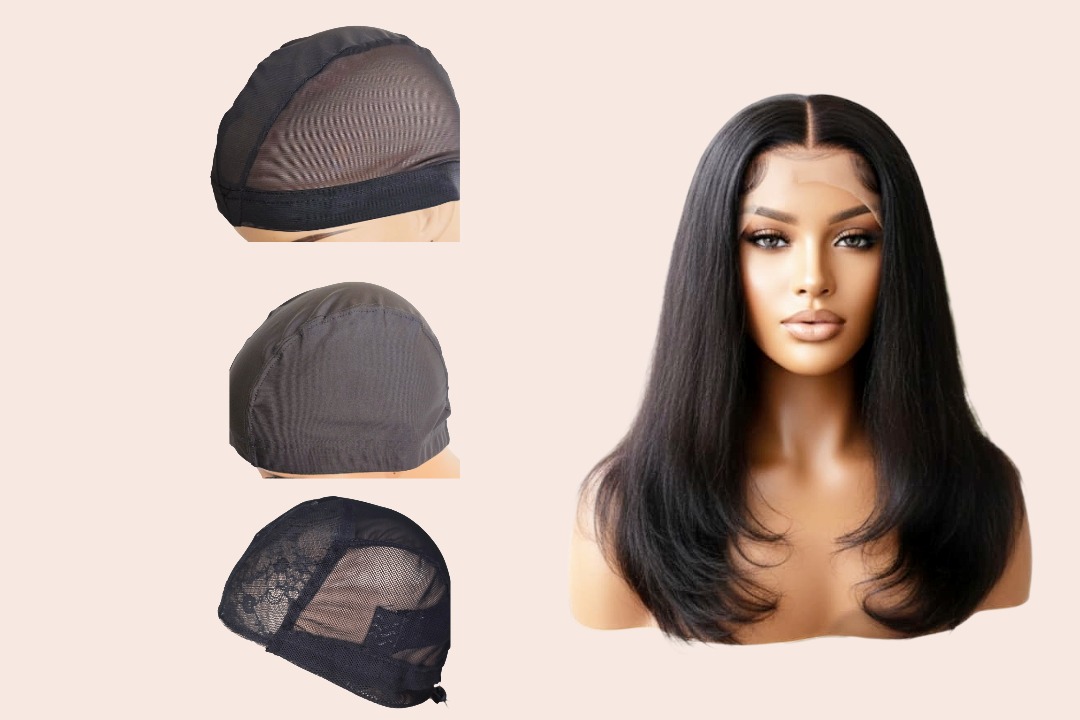
If you’ve ever typed “what are wig caps” into Google, you’re not alone. Most beginners focus on the hair – the length, the texture, the lace – and don’t realise how important the cap is until a wig starts slipping or never quite feels right.
I’ve been making wigs since 2011, before lace was widely available for everyday wear. One thing I’ve learnt is this: a beautiful wig on the wrong cap will never feel truly comfortable or secure.
Let’s break down exactly what wig caps are, how they work, and which ones I actually use in my business.
What Are Wig Caps and Why Do They Matter?
Put simply, when my clients ask me “what are wig caps?” I tell them:
A wig cap is the foundation of your wig – the base that matches your head size and holds the hair you sew onto it.
In wig making, the cap:
- Follows your head circumference
- Gives the wig its shape and fit
- Provides a stable base for sewing human hair bundles, closures and frontals
Without the right foundation, the wig can:
- Slip or feel loose
- Sit in the wrong place
- Look bulky or misshapen
When the cap is right, the wig feels like it was made for you.
How I Explain Wig Caps to Beginners
When a beginner comes to me and asks “So really, what are wig caps and do I need one?” I explain it like this:
“Think of your wig cap like the bra under a dress. You don’t see it, but if it doesn’t fit, you’ll feel uncomfortable all day.”
The hair gets the attention, but the cap quietly decides:
- How natural your wig looks
- How secure it feels
- How long it lasts
The Wig Caps I Actually Use in My Business
I don’t stock every type of cap. I focus on the ones that consistently give good results for real clients.
1. Japanese Mesh Wig Cap
This is one of my bestsellers and a favourite for custom builds.
Why I like it:
- Mesh construction – lighter and more breathable than solid caps
- Good stretch and recovery – hugs the head without going baggy
- Smooth surface – perfect for sewing bundles and closures neatly
- Reliable, neat construction – no flimsy edges or weak seams
If you’ve come here wondering what are wig caps best for beginner wig makers, the Japanese mesh cap is an excellent place to start.
2. Drawstring Double Lace Wig Cap
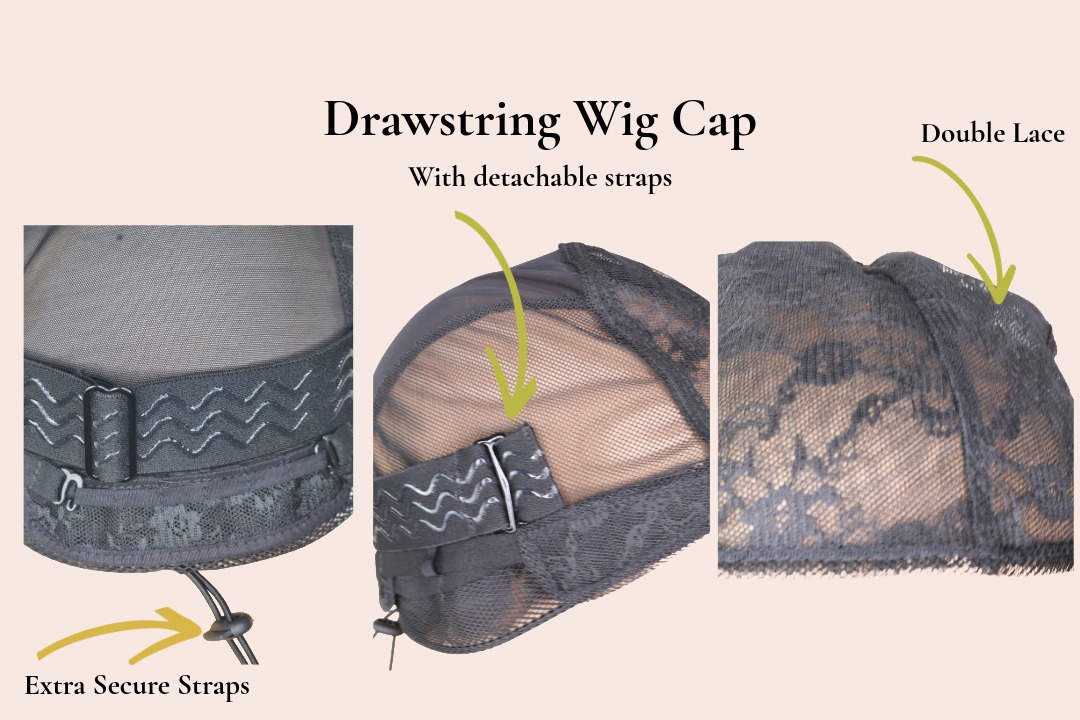
My drawstring double lace wig cap is ideal for people who worry about fit and security.
Key features:
- Drawstring at the back – lets you tighten or loosen the cap to match your head
- Double lace base – strong enough to handle stitching and higher densities
- Great for clients who feel they are between sizes and want that extra “locked in” feeling
If you’ve ever had a wig slide back during the day, this style of wig cap makes a huge difference.
3. Dome Caps
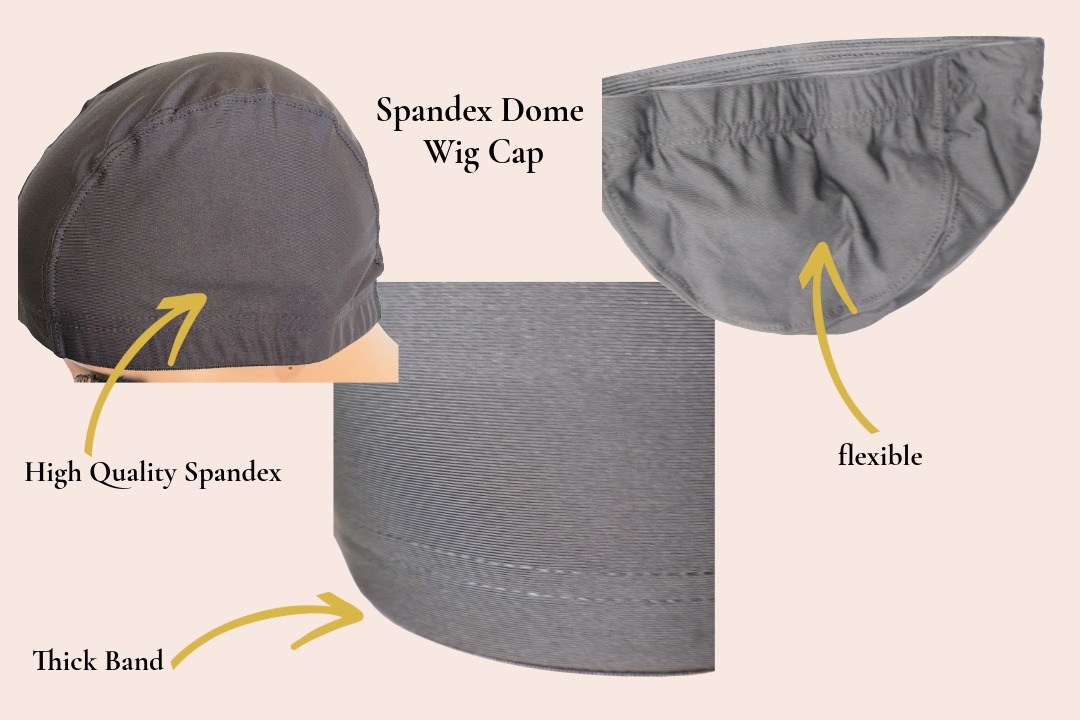
I use dome caps for specific styles:
- Closed-top wigs
- Simple units that don’t rely on lace
- Quick sew-in style wigs where a firm fabric base is enough
- Quick Weaves/Bonding styles (remember the days without lace closures etc..)
They feel more like a snug, stretchy hat that I sew the hair onto.
4. Ventilating Caps
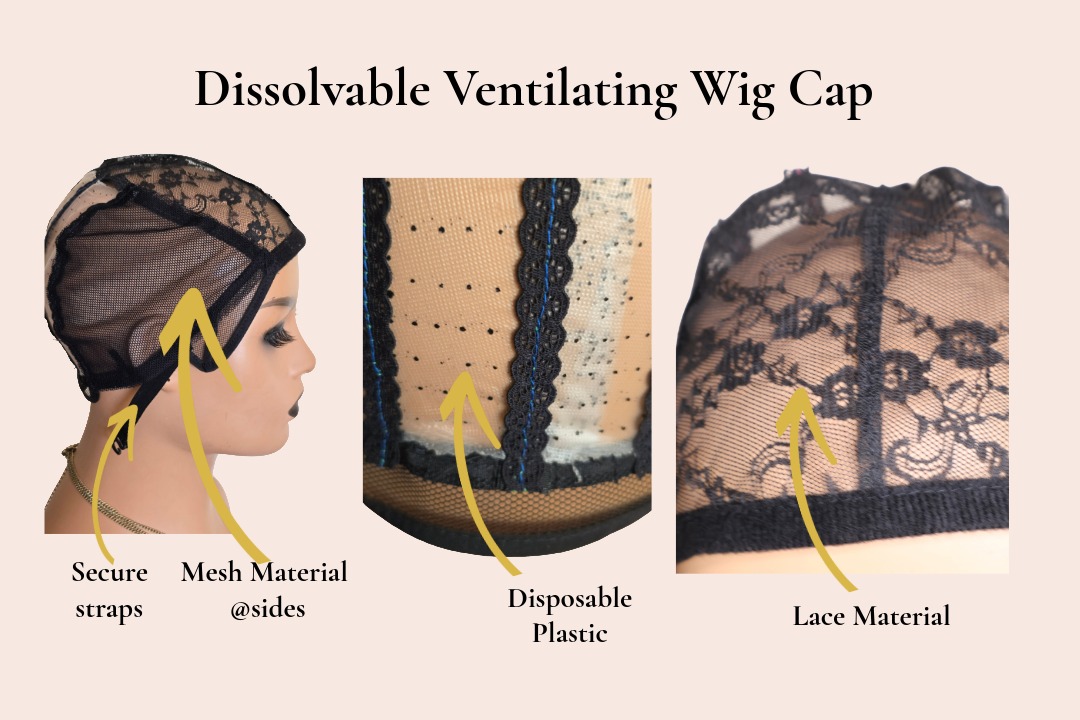
Ventilating caps are for more advanced work. They’re used when you’re:
- Hand-tying hair into the base (ventilating)
- Building custom closures or frontals
- Creating very natural hairlines and partings
Some ventilating caps are mesh with a peel-away plastic stabiliser; once the plastic is removed, you’re left with a light, breathable mesh base. That open structure:
- Lets you reach your scalp more easily
- Makes it easier to oil or treat the scalp between rows
- Keeps the wig feeling lighter and cooler than a solid spandex dome
If you’re brand-new, you don’t need to start here, but it’s useful to know these caps exist – they’re part of why some high-end custom wigs look incredibly realistic.
Case Study: When the Cap Size Is Wrong
One of my beginners came to me with a common problem:
- Her wig felt loose
- It kept slipping back
- She didn’t feel confident wearing it outside
The hair was fine. The issue was the wig cap size – it was simply too big for her head.
Here’s how we fixed it:
- I got her to measure her head circumference properly using a tape measure.
- We compared that to my size guide (I offer XS, S, M and L caps).
- She switched to the correct size cap for her head.
After that:
- The wig hugged her head properly
- No more slipping
- She finally felt comfortable and secure wearing it out
Same bundles, same closure – the only change was the foundation.
Wig Cap Sizes: Why “One Size Fits All” Is a Myth
A big misconception around what are wig caps is that they’re all one size. They’re not – and they shouldn’t be.
In my business I use:
- Extra Small
- Small
- Medium
- Large
Because everyone’s head is different, and the volume of hair underneath can vary too.
- A too-big cap causes slipping and gaps.
- A too-small cap causes pressure, discomfort and warping of the wig shape.
That’s why I always recommend measuring instead of guessing.
How to Measure Your Head for a Wig Cap
Here’s a simple way to get started:
- Around the head
Place a soft tape at your front hairline, pass it above your ears, around the nape, and back to the front. - Check the size chart
Compare that number to the cap size guide on the product page (XS–L). - Aim for snug, not painful
The right cap should feel secure and supportive, not tight or pinching. - Measure at least 3 times for accuracy
If you want extra support, you can also look at general guidance on measuring for wigs from trusted health resources or hair loss organisations and compare it with my size chart.
Five Practical Tips I Share With Beginners
Here are the points I go over again and again with first-time wig makers and new wig wearers:
- Start with measurements, not guesswork.
- Match the cap type to the style.
- Everyday custom unit → Japanese mesh
- Extra security → drawstring double lace
- Detailed hairline work → ventilating caps
- Inspect the cap before sewing.
Check seams, band, and lace for any weak points. - Don’t overstretch the cap.
Forcing a small cap to fit can ruin both the cap and the wig shape. - Check your caps over time.
If the band goes loose or the base is thinning, it may be time to rebuild the wig on a fresh foundation.
So, What Are Wig Caps Best For – and Where Should You Start?
By now you should have a clear answer to what are wig caps and why they matter so much:
- They are the foundation your wig relies on
- They decide how your wig fits, feels and behaves
- Choosing the right cap can turn a “just okay” wig into one you actually enjoy wearing
If you’re a beginner, I usually recommend starting with:
- A Japanese Mesh Wig Cap if you want breathability and a smooth base
- A Drawstring Double Lace Wig Cap if you want maximum security and an adjustable fit
From there, you can explore dome caps and ventilating caps as your skills and confidence grow.
If you’re still unsure which wig cap or size is right for you, you’re welcome to contact me. I’ll happily point you to the foundation that gives you the best starting point.
If you are experiencing hairloss issues checkout the NHS website for more information.
